A Room Begins with a Statement Table
Begin with the room around the object: sightlines, everyday movement and the kind of gathering you want a table to hold. A planning notebook for a future commission.
Read the story
Concept study — not a completed customer project
Imagine a personal-art concept where initials remain the main readable feature and colour provides a restrained secondary accent.
Imagine a personal-art concept where initials remain the main readable feature and colour provides a restrained secondary accent. No recipient or approved inscription is supplied.
Keep the exact text source separate from the visual sketch. Compare a simple outline with a more expressive edge while preserving a clear area for the proposed characters.
These are design prompts, not confirmed dimensions, materials, engineering, pricing or delivery arrangements. No customer, site, fabrication or installation is being reported.
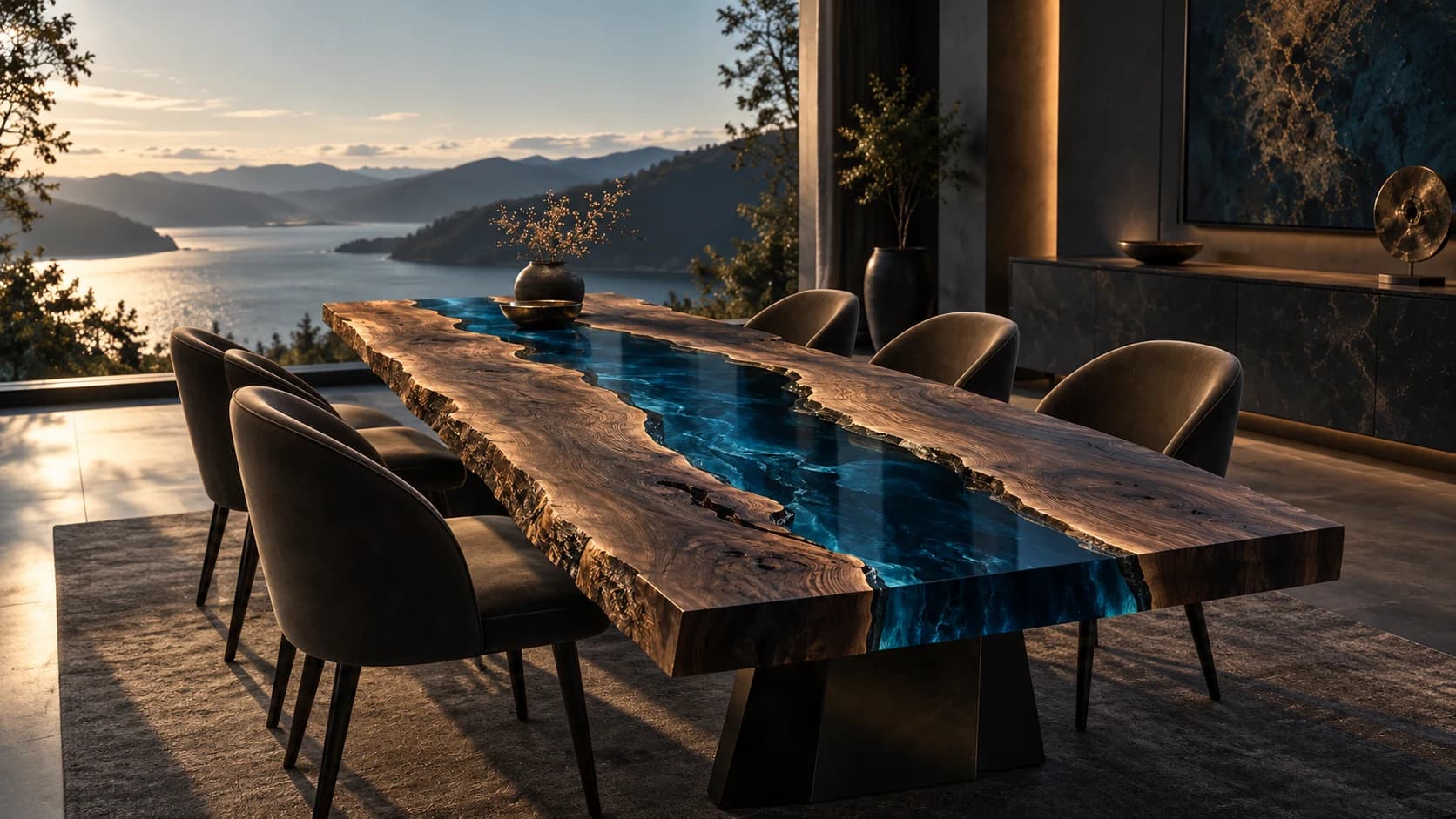
The supplied image is an illustrative reference for the visual relationship discussed here. It is not a rendering of this specific concept and does not show a completed commission. Similar images may inform other distinct studies; image count is not project count.
Use the idea as a starting question, then describe your actual purpose, constraints and preferences. Feasibility and the final design would need a separate conversation and recorded agreement.
Begin with the room around the object: sightlines, everyday movement and the kind of gathering you want a table to hold. A planning notebook for a future commission.
Read the storyFollow line, contrast and the meeting of surfaces. A visual vocabulary for discussing wood and resin without mistaking a design image for a material specification.
Read the storyThree outlines, many possible rooms. Organise the measurements, seating questions and everyday situations that should shape a dining-table conversation.
Read the story