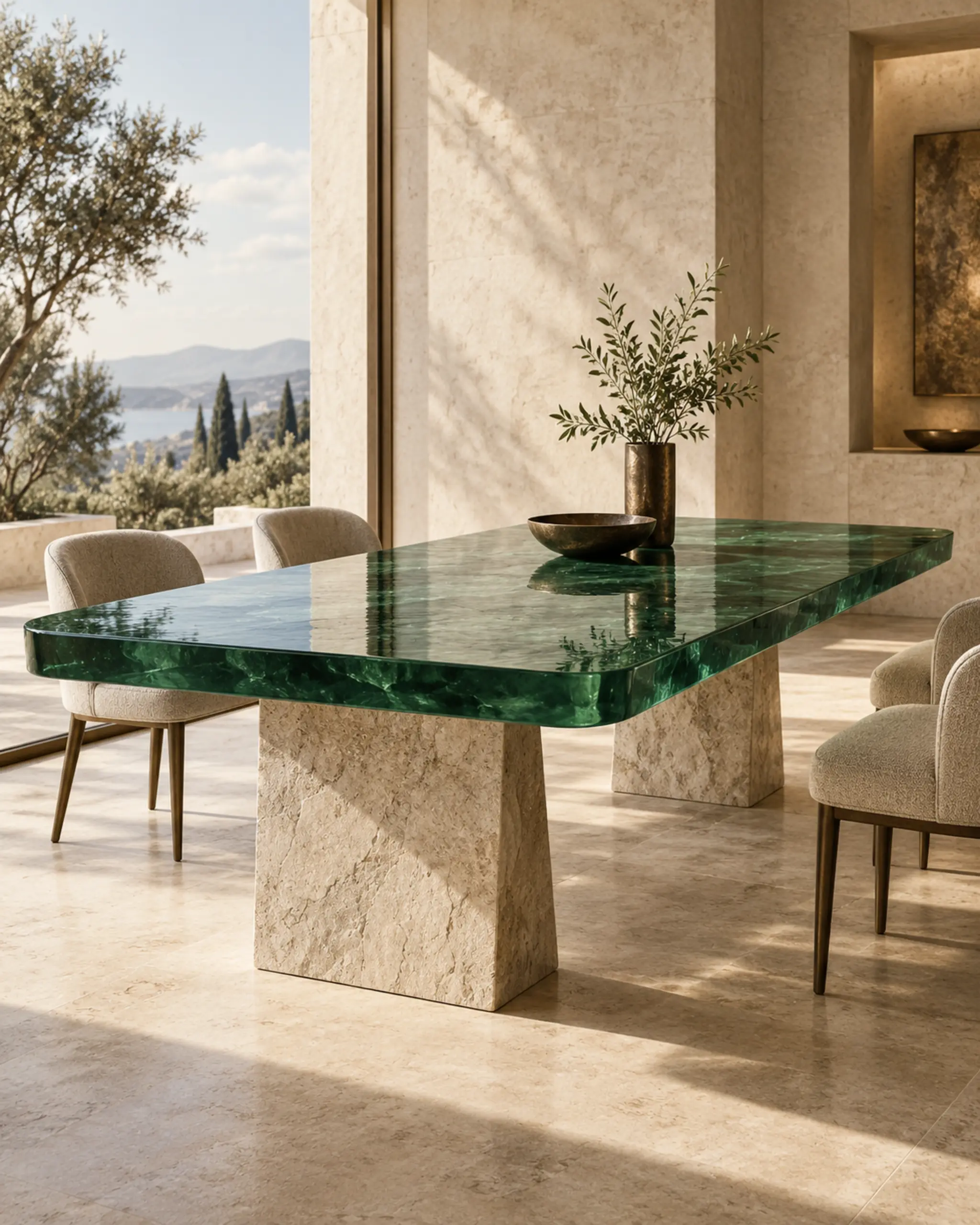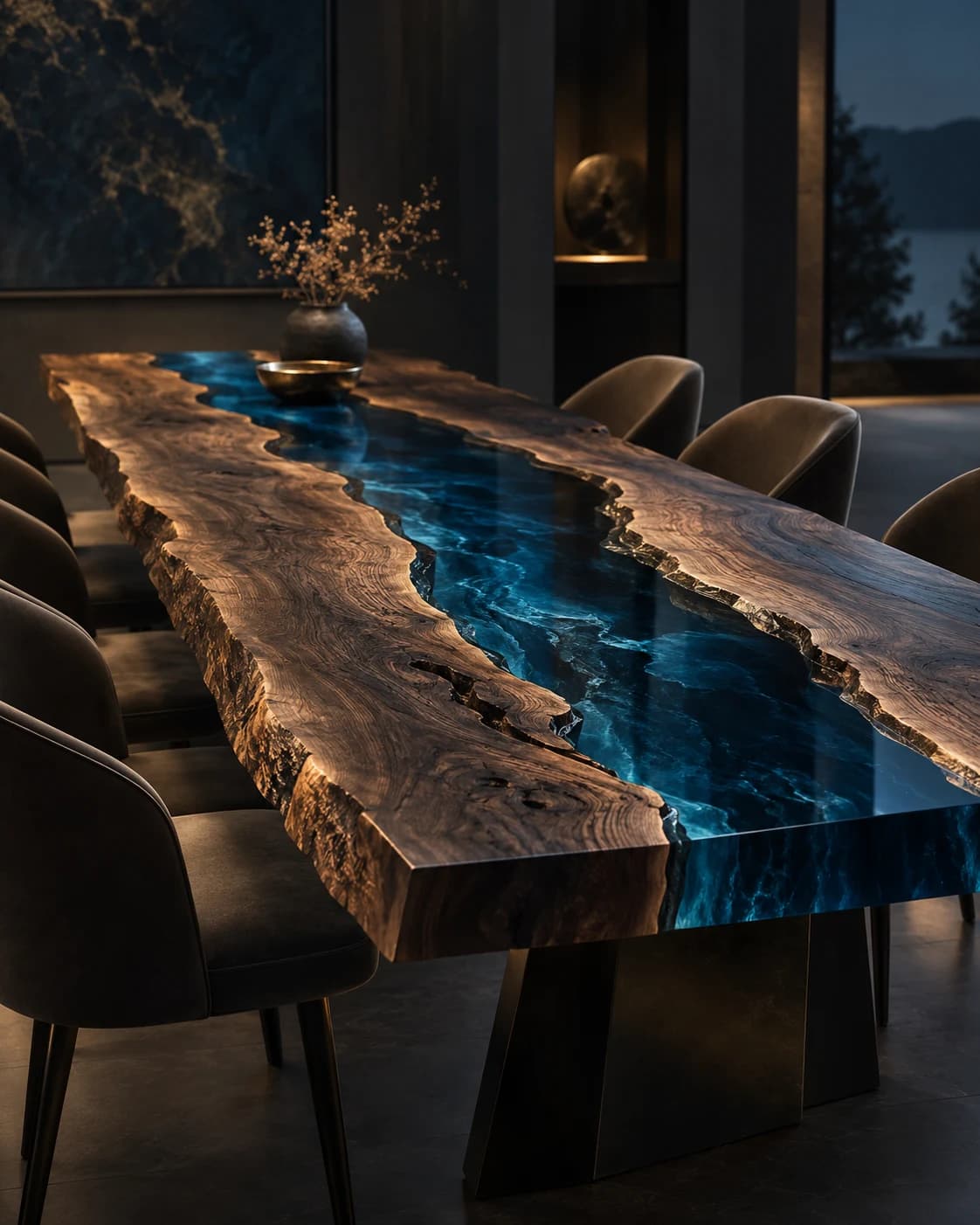
River Channel
Live-Edge Dining Table
Live-edge timber · pigmented resin · metal baseDP001 / Price on request
Begin with the room around the object: sightlines, everyday movement and the kind of gathering you want a table to hold. A planning notebook for a future commission.
By RivyaLivingArt · 4 minute read
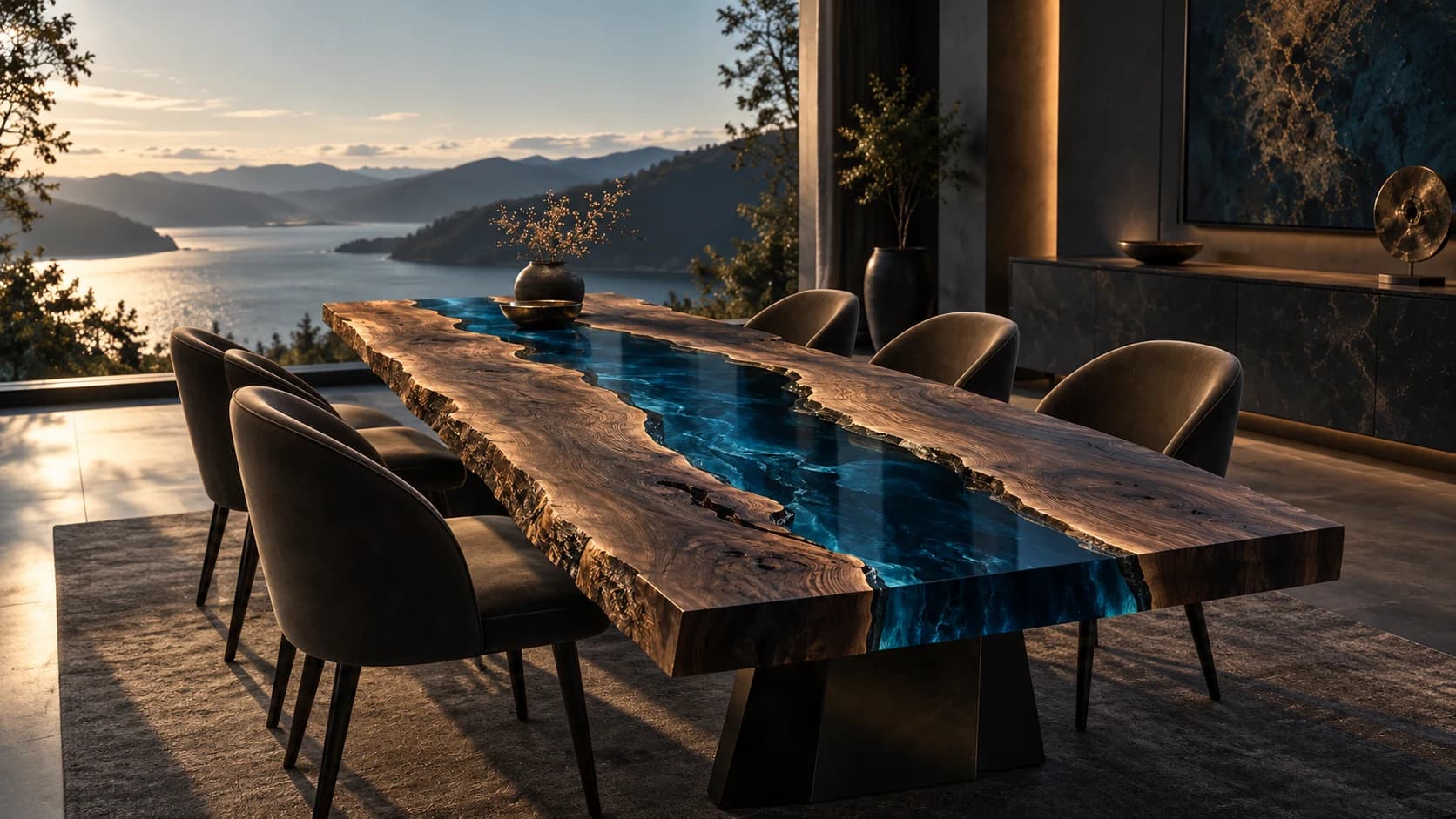
A statement table gives a room somewhere to begin looking. That does not mean it must be the largest or brightest thing in view. Its presence might come from an unusually quiet outline, a visible meeting of materials, or the space deliberately left around it. Before choosing a design, stand at the room’s usual entrance and describe what you notice first. Then consider what you would like to notice first.
Write down the room’s ordinary activities as well as its occasional gatherings. A dining space used for conversation, reading and homework presents a different brief from one opened mainly for guests. These observations are more useful than declaring a style immediately. They give the eventual discussion a purpose that can survive changes of colour, shape or finish.
On a simple plan, mark the furniture that is staying. Include cupboards, a large sofa, open shelving and anything else that occupies a strong visual area. A substantial table beside another substantial object may feel concentrated; the same table in an open setting may read as a calm centre. Neither arrangement is inherently wrong. The useful question is whether that concentration matches the atmosphere you are trying to make.
Sketch the routes between doorways and the places people actually use. Add the opening direction of doors, drawers and cabinets. A table footprint alone misses the changing outline made by someone pulling out a chair, carrying a tray or moving toward a window. Record the situations you need a designer to consider instead of treating an attractive overhead composition as a complete plan.
Where appropriate, represent a proposed outline on the floor with a removable marker that will not damage the surface. Observe it during normal use and note awkward moments. This is a conversation aid, not a clearance certification. Ask the project team to confirm the dimensions and any relevant access or accessibility requirements for the particular room and the people who use it.
Bring the table into a conversation with the room’s existing surfaces. Identify the most visible wood tone, the largest fabric area and the metal details you intend to keep. A reference board becomes more useful when each image carries a short explanation: the warmth of this timber, the restraint of that outline, or the relationship between an opaque area and a translucent one.
A focal object does not need every surrounding choice to repeat it. Try describing the room in three layers: the table, the supporting furniture and the quieter background. Repetition can happen through one small relationship, such as a warm tone or a curve, while other elements remain distinct. This keeps the brief specific without turning the whole room into a matching set.
Consider what is likely to change later. A rug, pendant or chair may be easier to replace than the commissioned object, but your own priorities should lead that decision. Make a list of fixed elements and flexible elements. It helps the conversation stay anchored when a reference image contains an appealing room whose architecture, light or proportions are very different from yours.
A useful initial brief is a small set of clear observations. Include a measured room sketch with its units, photographs you are entitled to share, and a description of how the space is used. Label proposed dimensions as proposals. If an event or move influences the timing, state that context and ask what can realistically be assessed before committing to a date.
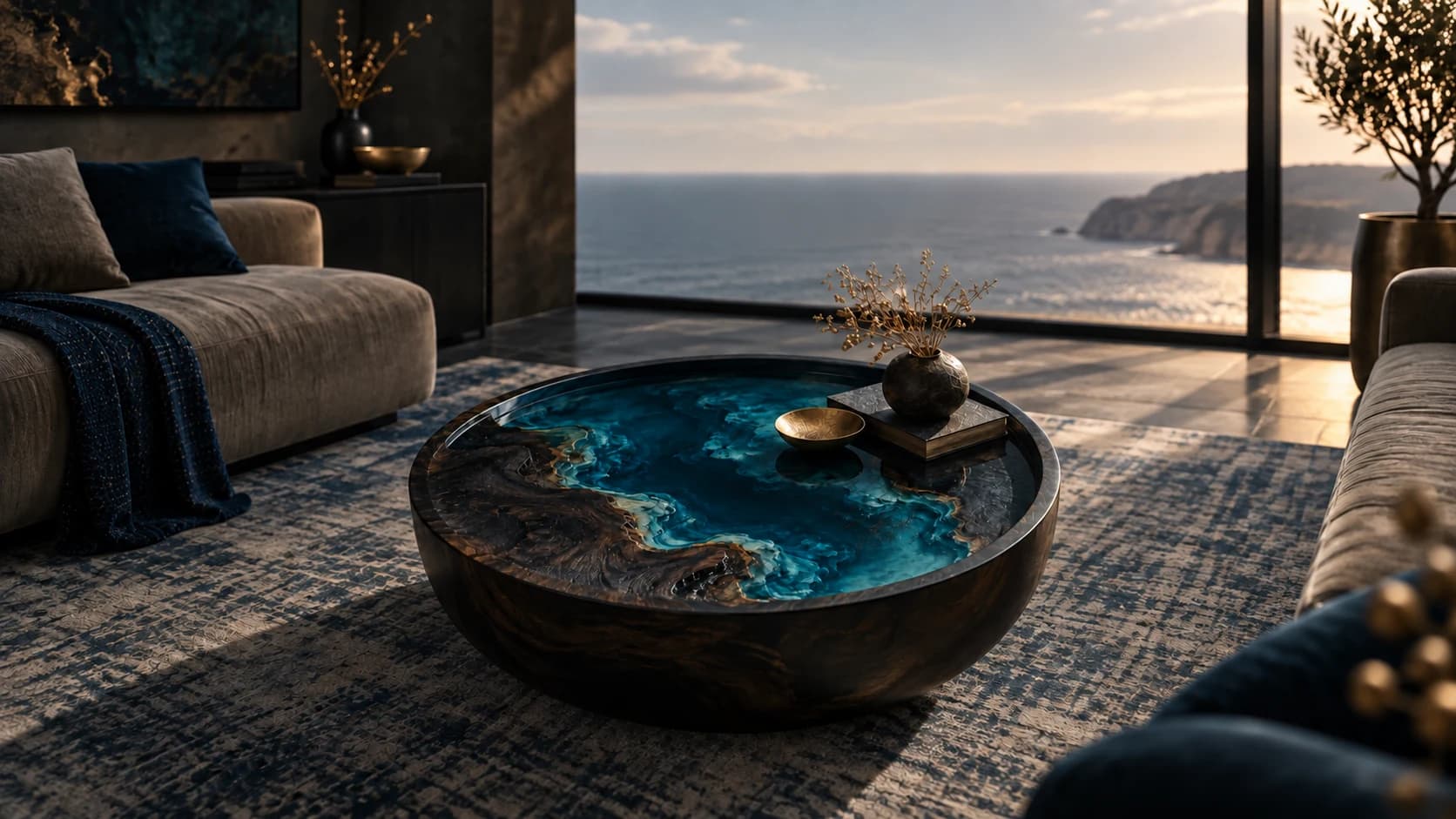
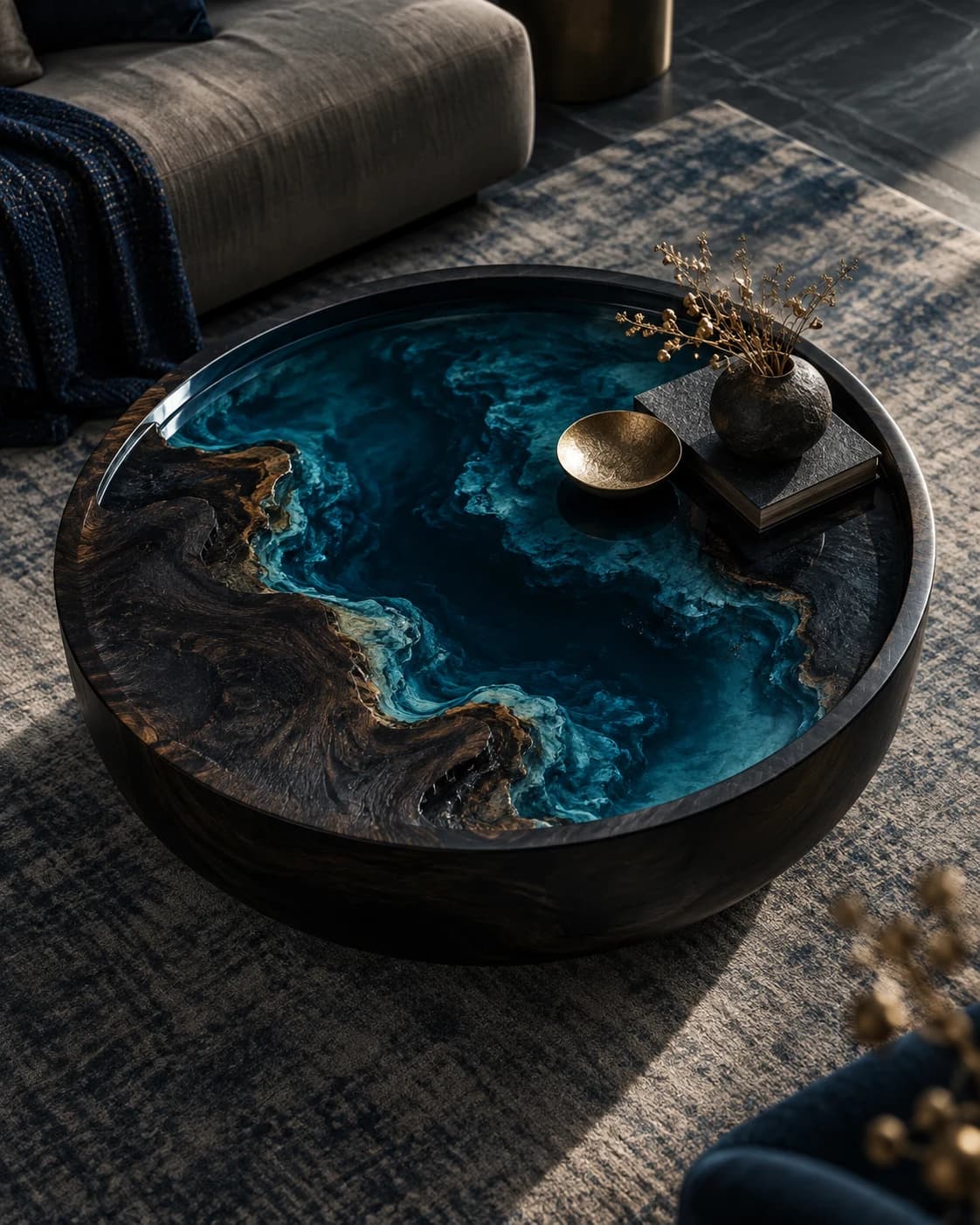
Study a low table through silhouette, the space beneath it and its relationship with seating. An editorial exercise in making an object belong to a larger composition.
Read the story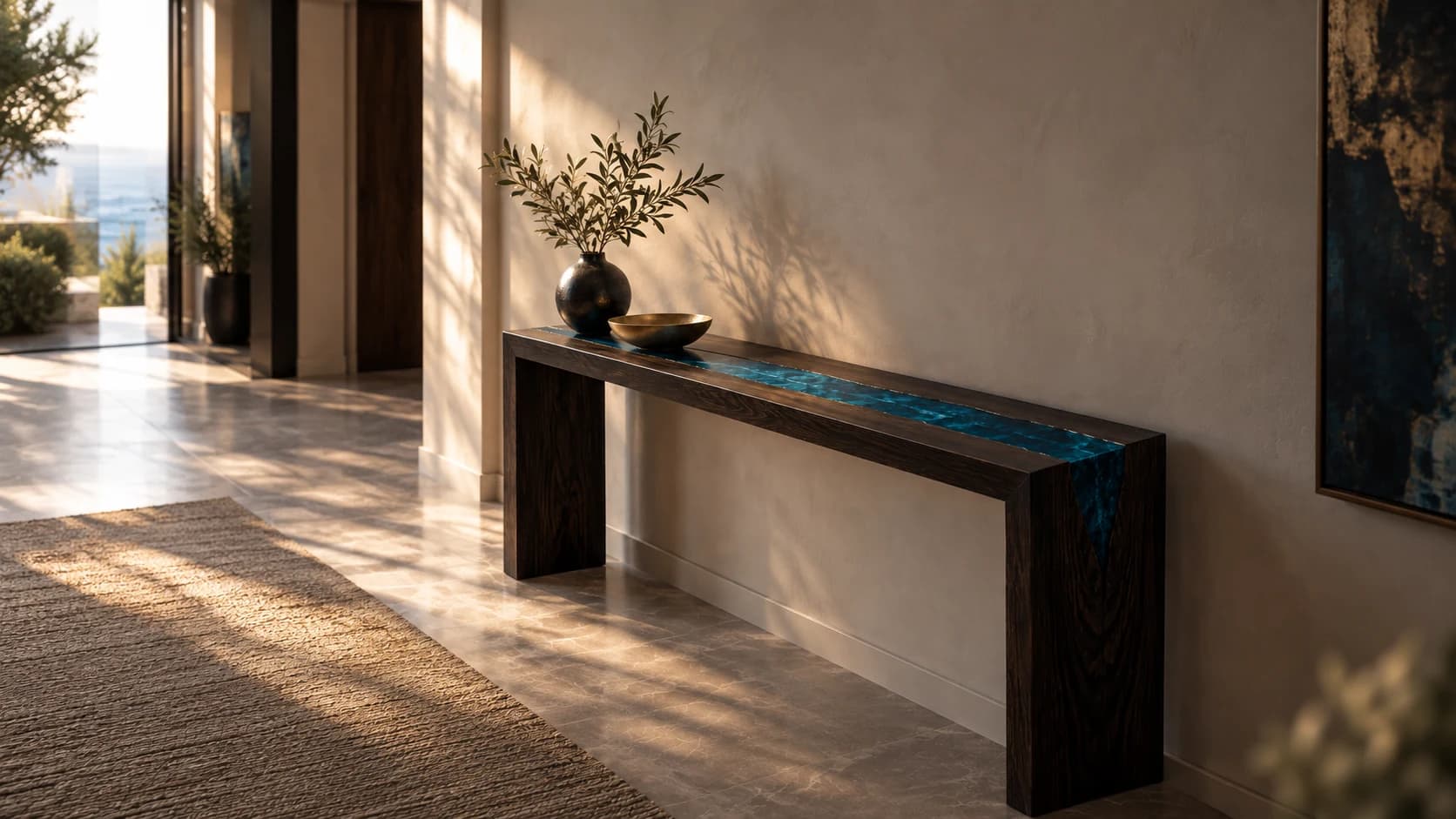
Plan an arrival space through rhythm, everyday objects and the view beyond the doorway. A console can anchor the composition while leaving the practical questions visible.
Read the storyBuild a palette from the room you already have, then explore how a material-led object can introduce contrast, repetition and a little visual breathing space.
Read the story