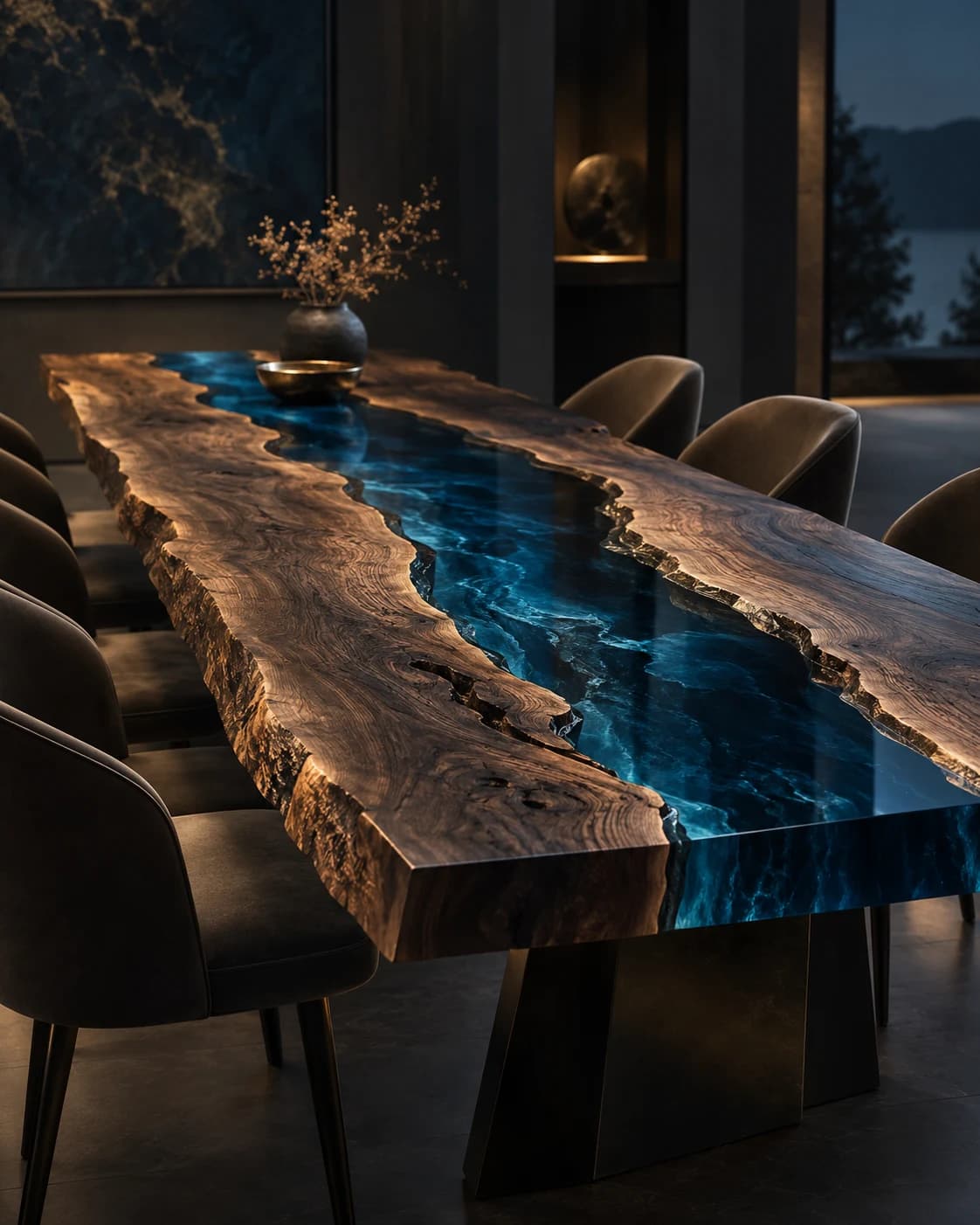
River Channel
Live-Edge Dining Table
Live-edge timber · pigmented resin · metal baseDP001 / Price on request
A compelling image starts a conversation. Learn how a visualization, drawing, material reference and finished object contribute different information to the design process.
By RivyaLivingArt · 3 minute read
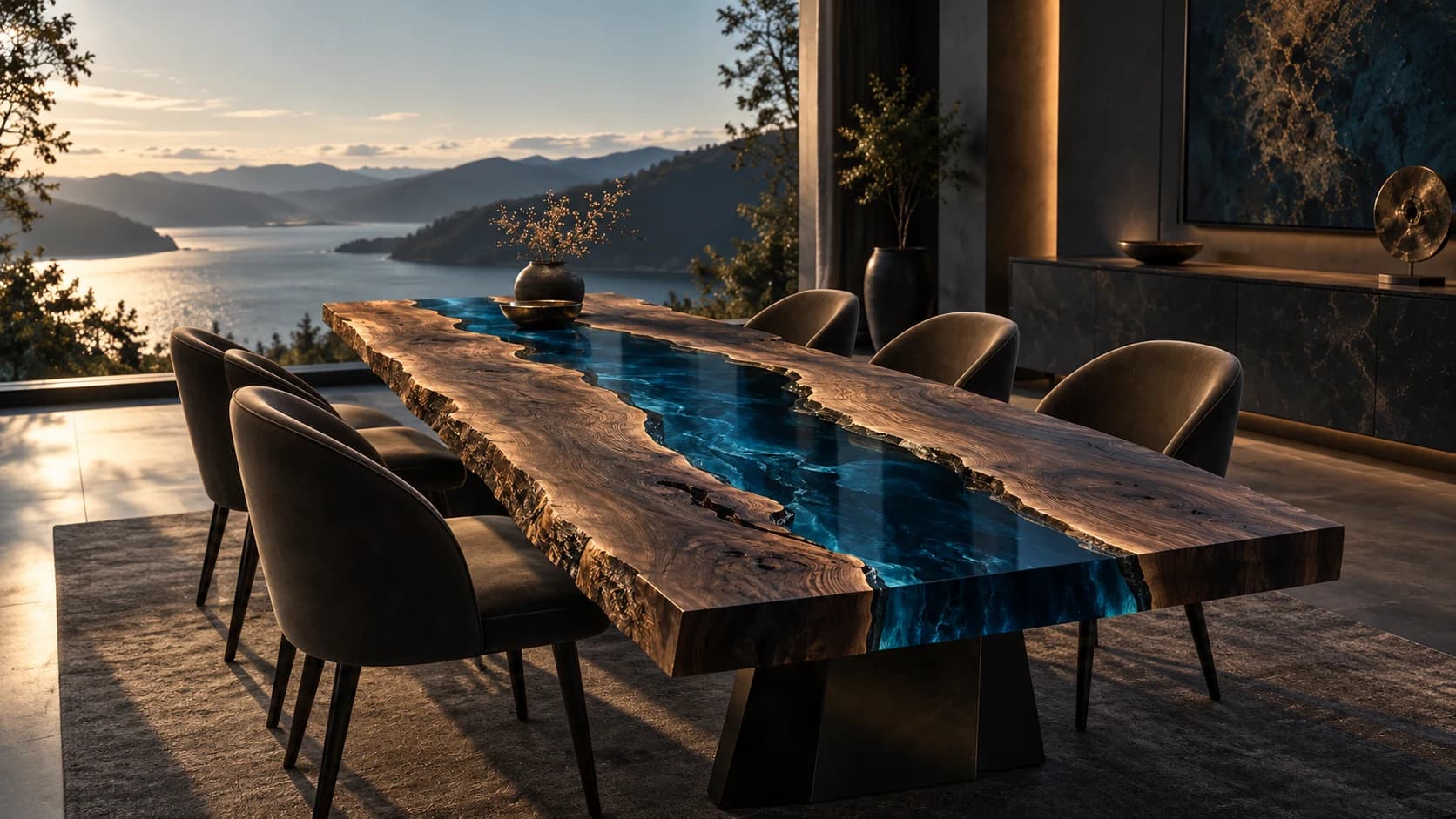
A design image can express atmosphere remarkably quickly. It may suggest the weight of a silhouette, the rhythm of a material boundary or the way a table could anchor a room. Those are useful contributions, but they do not make the image a complete description of an object. Treat it as an invitation to identify what matters visually. Write down the features that interest you and the questions it leaves open. In this collection, images labelled as designs remain designs even when they look photographic. They are not proof that a particular piece has been made, installed or offered for sale.
A drawing can communicate information that a mood image cannot, yet it also needs context. Check what views are included, which dimensions are shown and whether important details remain unresolved. Ask who prepared it and what stage it represents. A sketch for discussion should not be read as an installation instruction simply because it contains numbers. Changes need a clear revision reference so everyone is discussing the same proposal. If a drawing conflicts with a text description, pause the decision and ask for clarification. Choosing whichever source appears more convenient leaves the disagreement available to resurface later.
A physical material sample offers another kind of evidence. It can help a conversation about colour, texture and the appearance of a proposed finish under particular conditions. It still needs identification: which material, which finish and which proposal does it belong to? Ask whether variation is expected and how the final selection will be recorded. A sample does not automatically establish every property of a larger finished object. Performance, maintenance and suitability claims require information relevant to the actual specification. Preserve the distinction between liking the look of a sample and approving all the unresolved decisions around the final piece.
An effective review can show a design image, a drawing, a material reference and a written specification together while keeping their labels distinct. Give each a date or revision identifier and state its purpose. If a later image changes the shape, ask whether the drawing has changed too. If a finish changes, ask which written fields and references need updating. Keep a copy of the version discussed and record which decisions remain open. A later revision should clearly identify what has changed.
Follow line, contrast and the meeting of surfaces. A visual vocabulary for discussing wood and resin without mistaking a design image for a material specification.
Read the storyGive every reference a clear job, then separate the mood it suggests from the samples, drawings and recorded choices a real object will need.
Read the storyDescribe what a reference image seems to show, then ask what would need a real sample. A visual notebook on backgrounds, viewpoints, reflections and the impression of depth.
Read the story