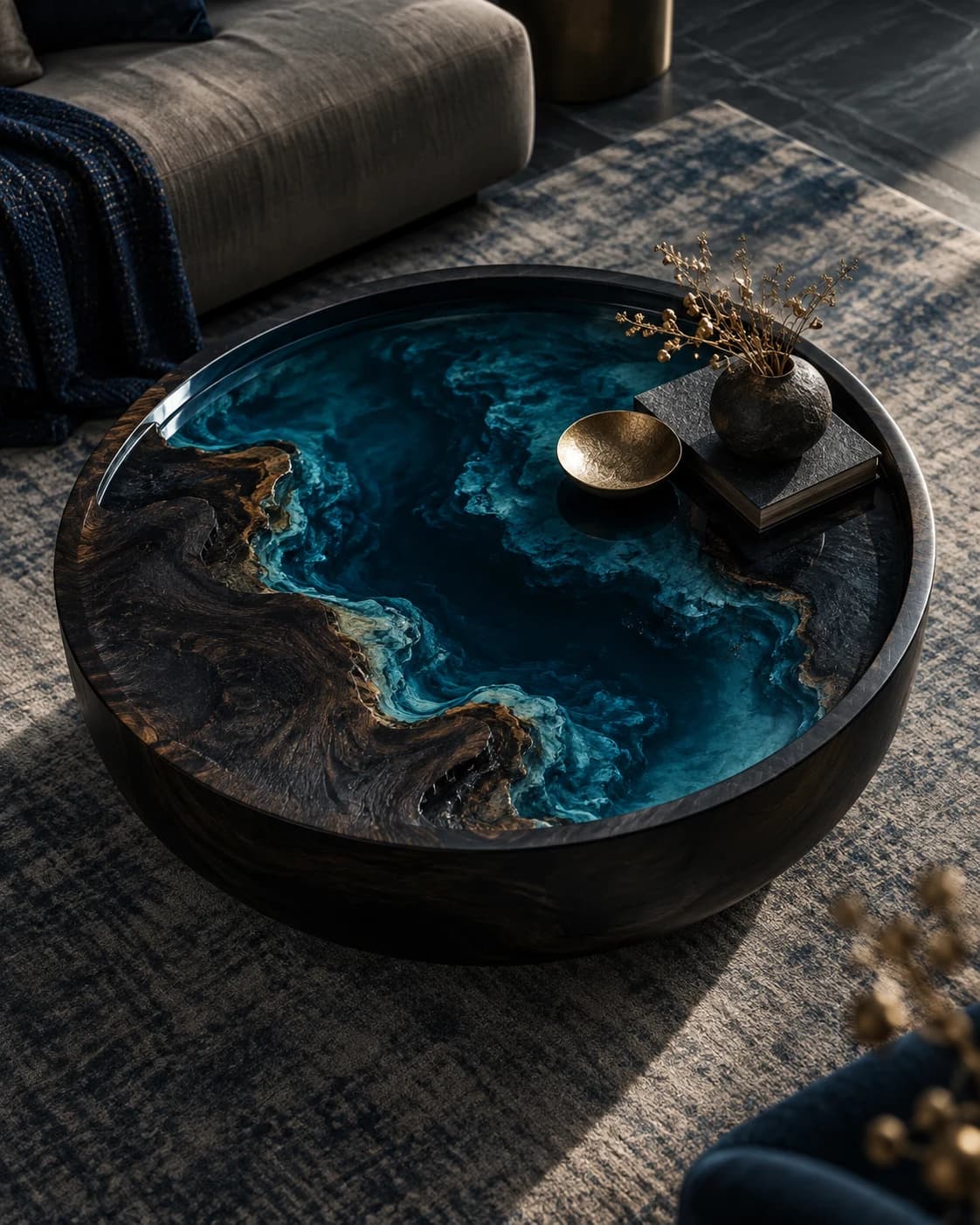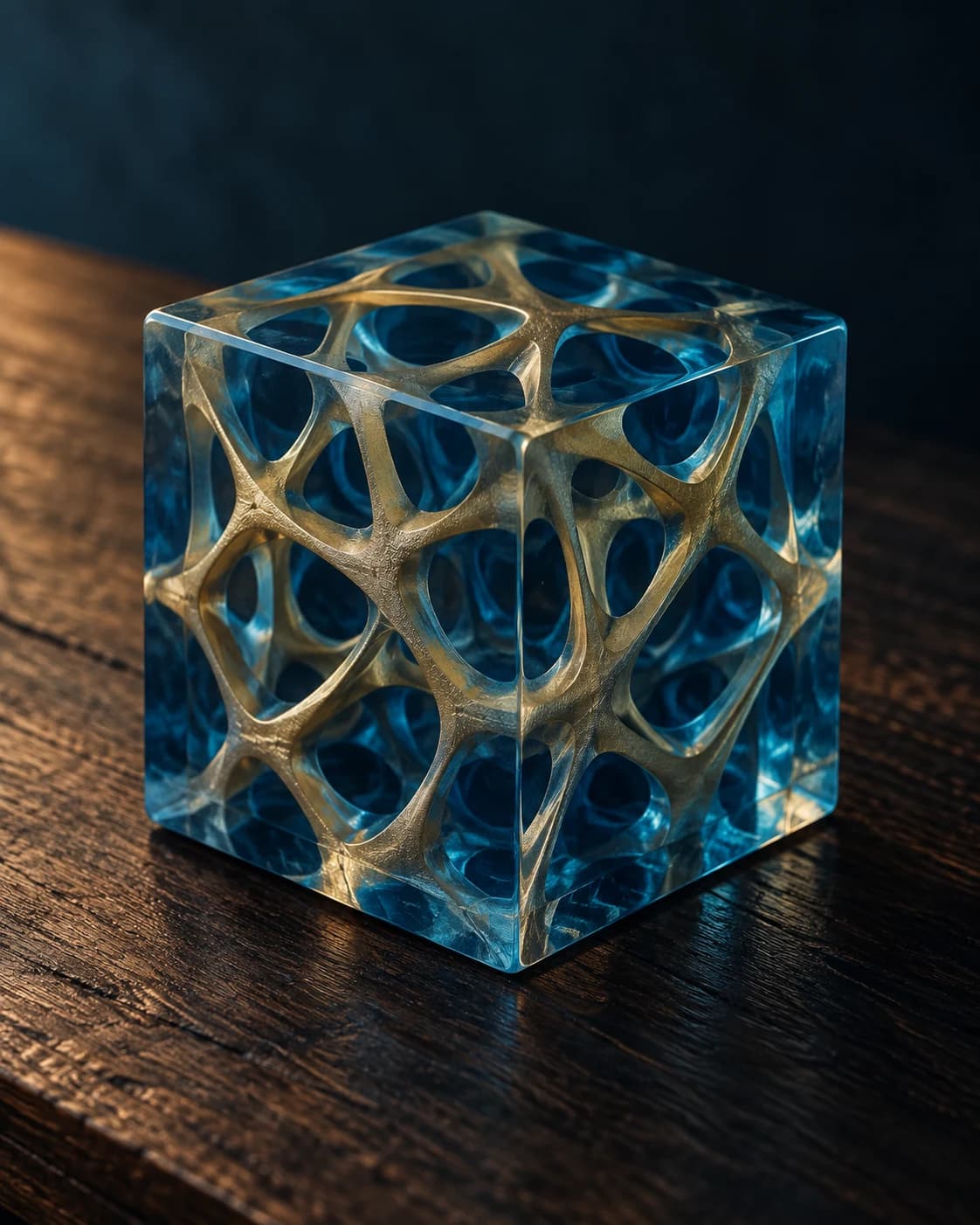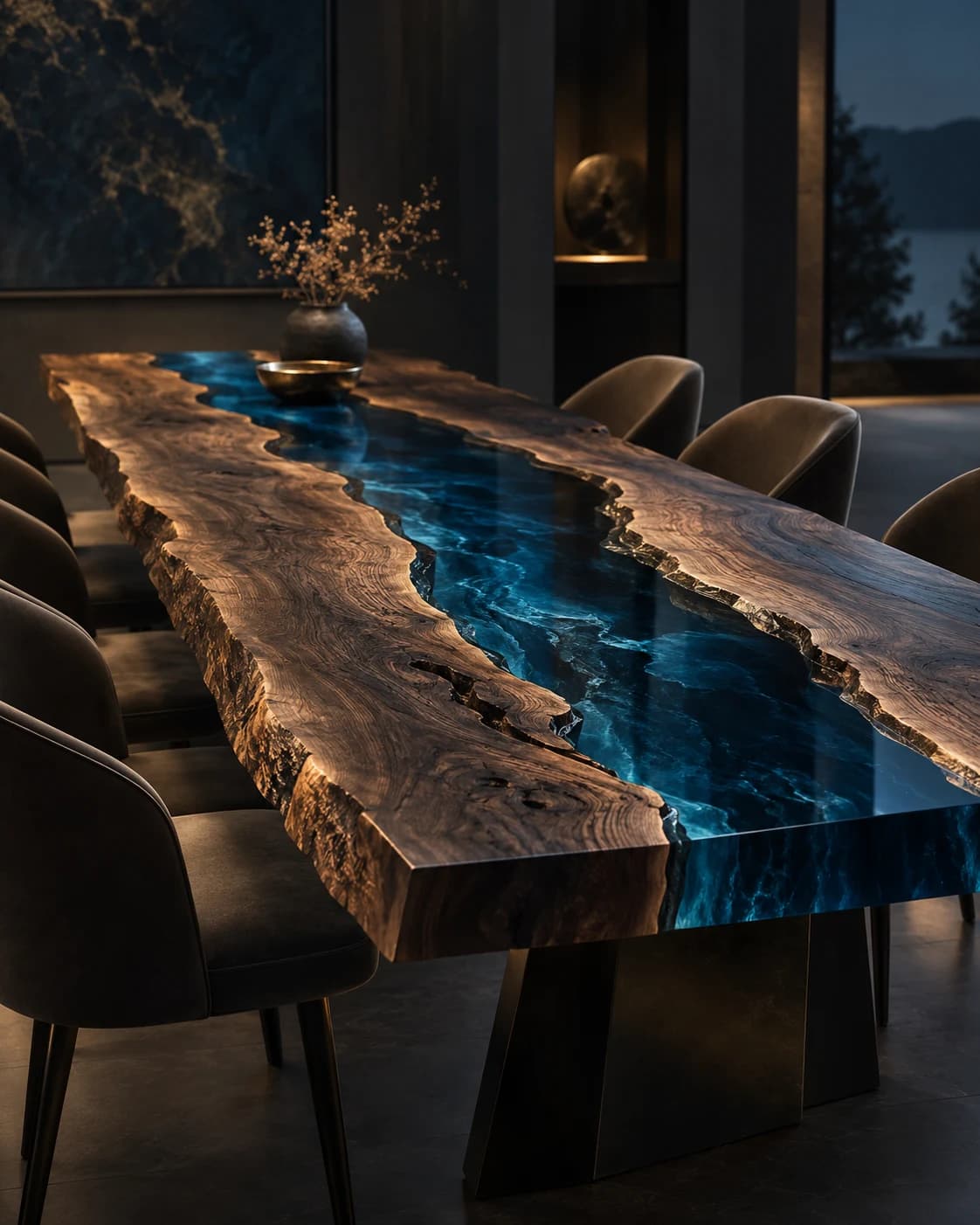
River Channel
Live-Edge Dining Table
Live-edge timber · pigmented resin · metal baseDP001 / Price on request
Describe what a reference image seems to show, then ask what would need a real sample. A visual notebook on backgrounds, viewpoints, reflections and the impression of depth.
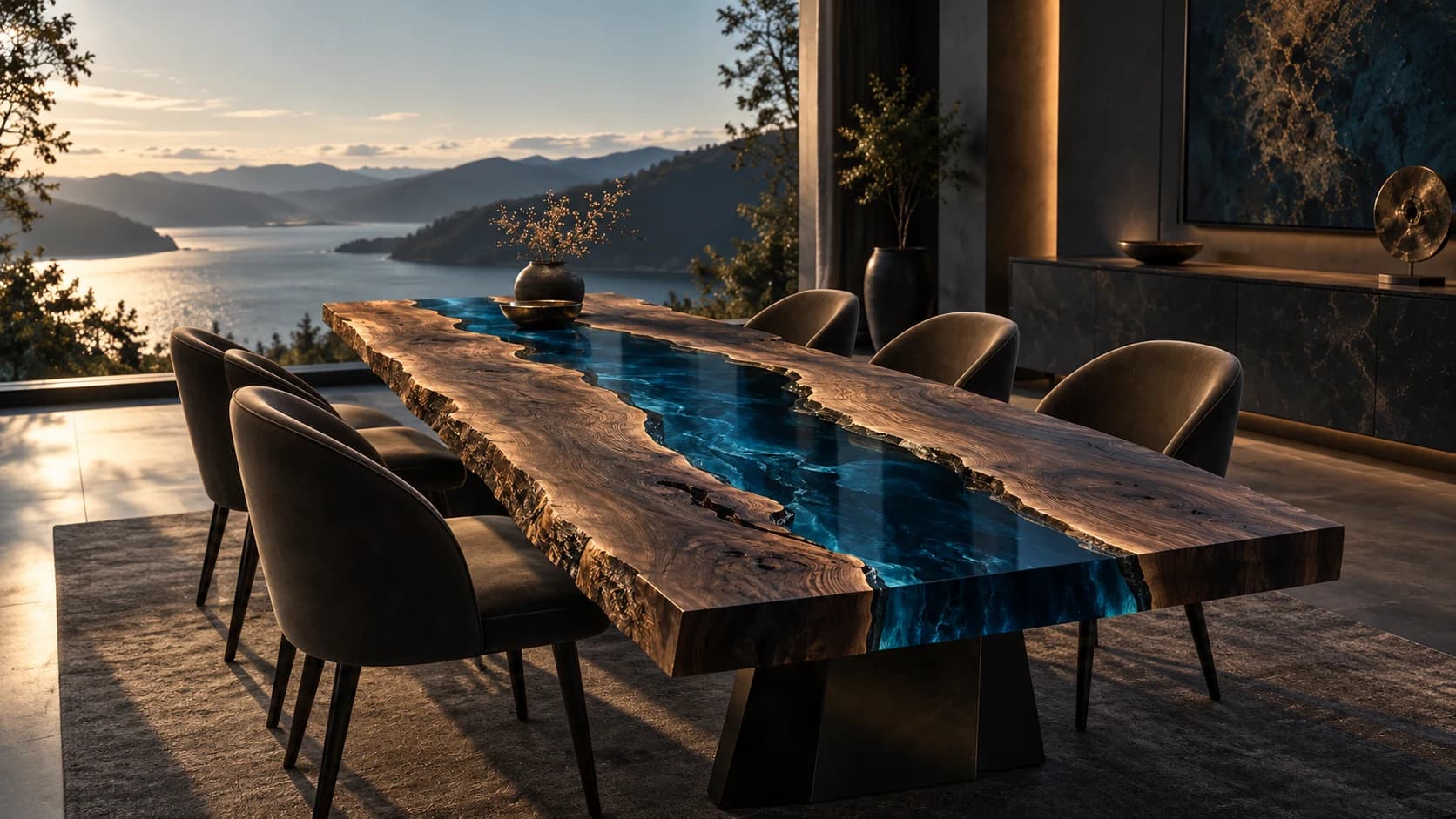
By RivyaLivingArt · 4 minute read
A reference image may make a resin area appear deep, luminous, smoky or almost opaque. Those words can be useful in a design conversation when they describe an impression rather than claim a verified material property. Begin by saying what you notice and where you notice it. Does the effect seem strongest at an edge, across a broad area or beside a contrasting material?
Then explain why the impression matters to your brief. You may be drawn to a sense of visual depth or to the way a quiet colour area sits beside visible grain. That preference can be discussed without assuming a particular formulation or finish. The distinction keeps an appealing photograph in its proper role as a visual reference while leaving the actual material system to be identified and reviewed.
Look beyond the object in a reference image. A pale background, a dark floor or nearby furniture contributes to the appearance of the whole composition. When you compare two images with different settings, you may be responding to those surroundings as much as to the material itself. Make a note of the background before drawing conclusions about which surface or colour you prefer.
An art-direction study can hold the proposed object and viewpoint constant while exploring a small number of clearly labelled background alternatives. Such an illustration is a way to discuss visual relationships, not a simulation that proves how a physical product will behave. Label each study as a design image, an approved photograph or a proposed view so its purpose stays clear.
A top view, a side view and a close detail show different parts of a design. One may emphasise the arrangement of materials, another the edge and another the way a particular area catches the eye. When building a brief, identify which viewpoint supports the observation you are making. A detail image can be compelling while telling you very little about the complete object in a room.
When looking at a glossy-looking reference, consider whether a bright area belongs to the surface’s apparent colour or to something reflected in it. You may not be able to settle that question from one image, and it is useful to say so. Describe the visual effect you like without building a specification around an uncertain interpretation of a highlight or a dark patch.
The setting of the eventual object matters to the discussion as well. Large windows, nearby colours and planned lighting are worth showing in the room context, but this editorial exercise does not prescribe lighting or predict a finished surface. Ask which actual references and viewing conditions are appropriate for a real review. A preference for a calm appearance should be explored with reliable information, not translated automatically into an unsupported finish claim.
Some design images draw attention to the boundary between materials; others invite you to look into an area that seems to have depth. These are different compositional interests. In a brief, specify whether you are responding to the outline, the colour field, the meeting of surfaces or the apparent layers within it. The more precisely you describe the observation, the less the conversation depends on a vague request for transparency.
Turn your observations into a short request for clarification. Identify the reference, describe the impression you want to explore and ask which physical sample or documented view could help discuss it. Include the intended setting and distinguish fixed room conditions from ideas still under consideration. The goal is to connect a visual intention to information that can be reviewed, rather than to demand an exact effect from an unspecified image.
Follow line, contrast and the meeting of surfaces. A visual vocabulary for discussing wood and resin without mistaking a design image for a material specification.
Read the storyGive every reference a clear job, then separate the mood it suggests from the samples, drawings and recorded choices a real object will need.
Read the storyA compelling image starts a conversation. Learn how a visualization, drawing, material reference and finished object contribute different information to the design process.
Read the story